RECENT WORK
REDOX
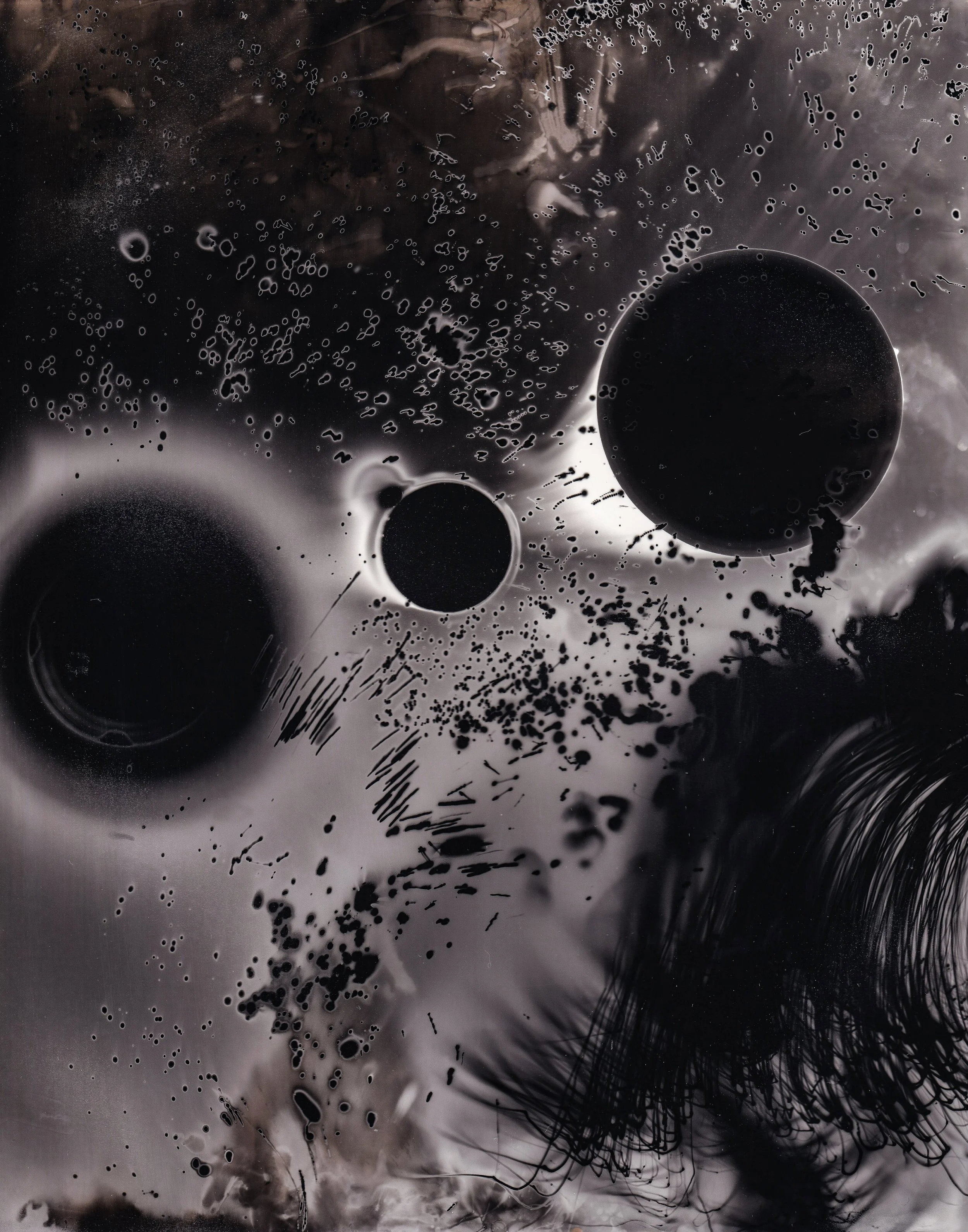
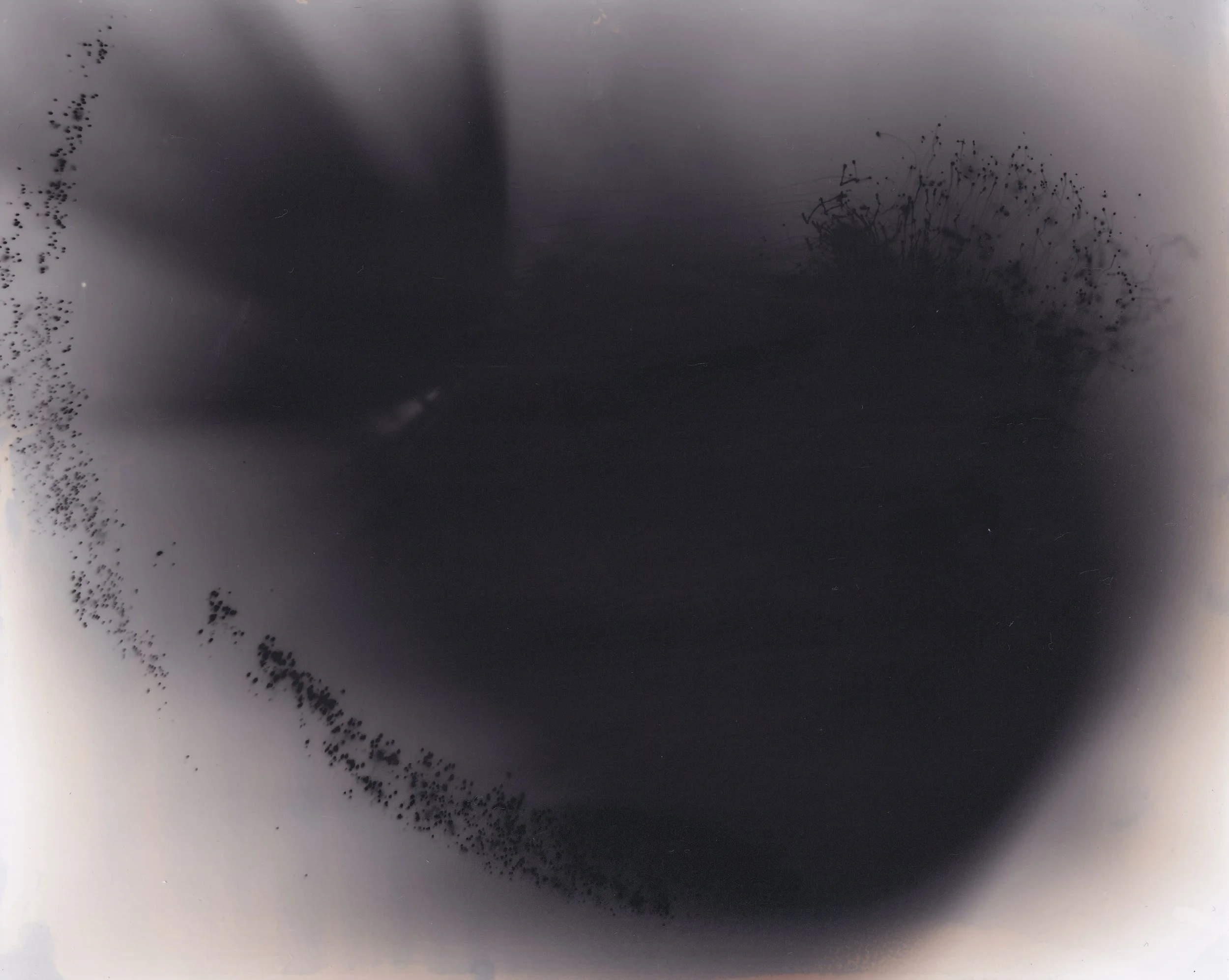
Redox is a depiction of an origin field, a passage through the primordial void where the first signals of order begin to emerge from chaos. This is one piece in Elyse Jealette’s collection of photograms, which are photographs created without a camera using a combination of tubes, brushes, exposure and light-sensitive paper.
From cellular respiration and photosynthesis to batteries and nuclear bombs, the same elemental process unfolds. Known as reduction–oxidation reactions, this chemical transfer drives both biological metabolism and the technologies that shape modern civilization.
Here signals scatter, cluster, and disperse through a network of turbulence, where energy moves between transmitter and receptor. Particles appear as nodes within a charged field of concentric spheres, illustrating an early schematic of matter organizing itself.
MAGNES
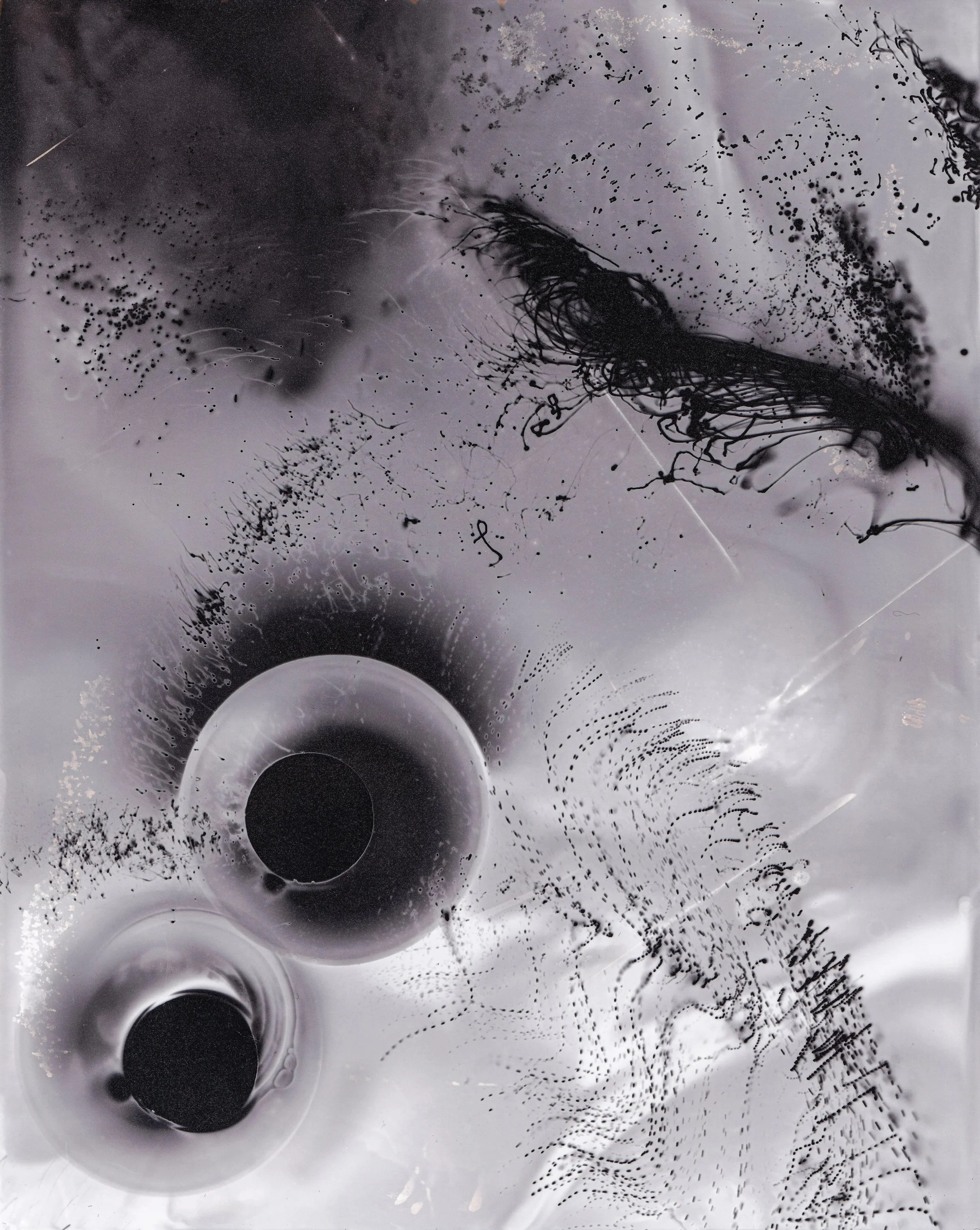
Magnes recalls gravitational lenses, black holes, and the shifting dynamics of invisible fields. This piece is part of Elyse Jealette’s collection of photograms, which are photographs created without a camera using a combination of tubes, brushes, exposure and light-sensitive paper.
Here, dark circular bodies appear suspended within a luminous field, suggesting planetary masses, magnetic poles, or particles held within an unseen force. Constellations of dispersed matter trace the geometry of magnetism — patterns of attraction and repulsion unfolding across scales.
LIFE ON MARS
Ferrofluid Photography Collection by Elyse Jealette (2026)
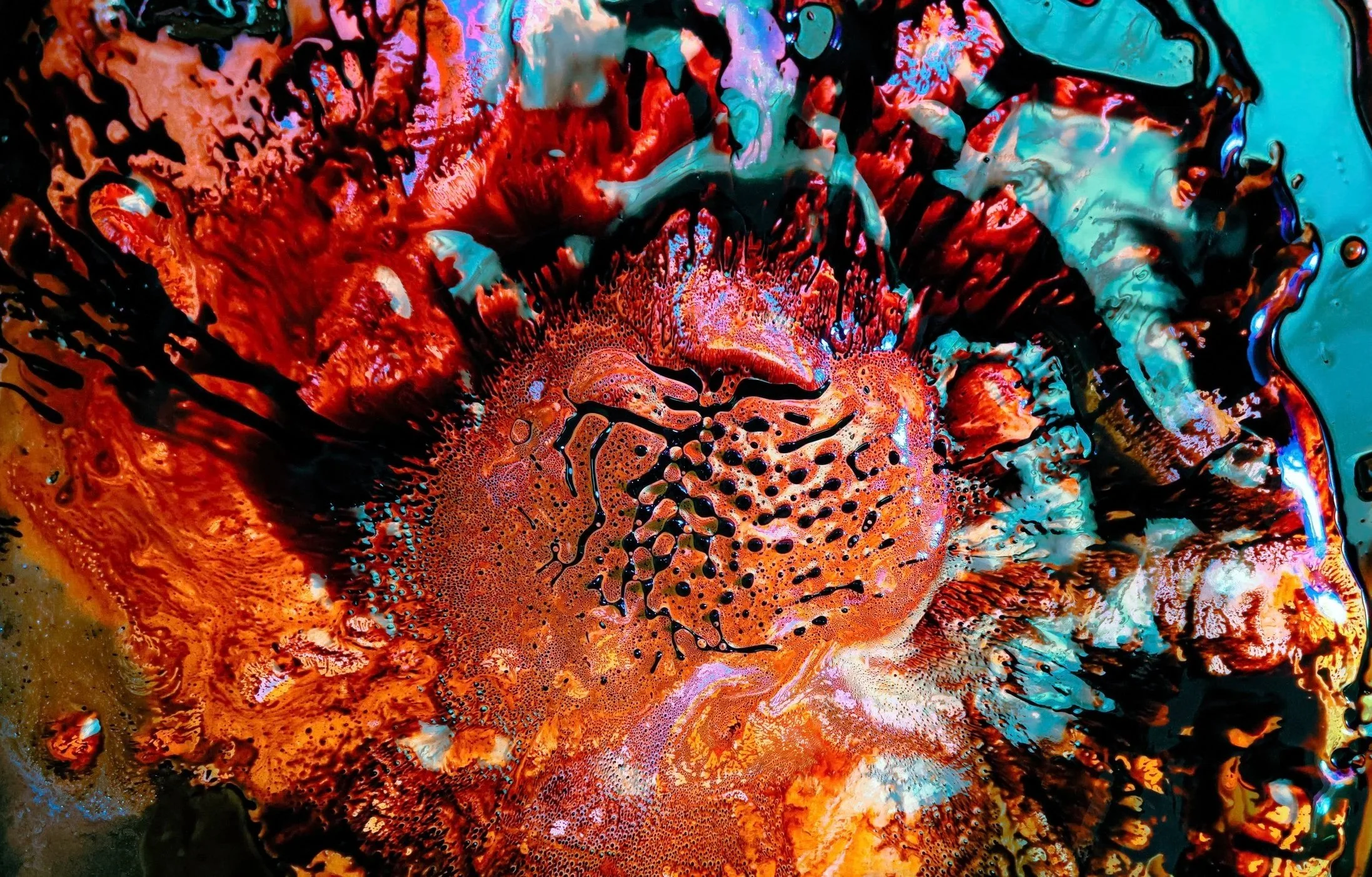
Life on Mars is a photography series by Elyse Jealette inspired by biosignatures identified by NASA’s Perseverance rover in 2025. Using ferrofluid, light, paint, and magnetic fields, the work explores abstract forms that evoke planetary terrain, cellular structures, and emergent life systems.
Each image draws from specific regions on Mars, from river deltas and sedimentary formations to vast fields of volcanic ash. These landscapes are reimagined through a process that is both experimental and intuitive.
Branching forms, mineral-like textures, and flowing structures suggest a distant world in flux, illuminated through the lens of observation and curiosity.
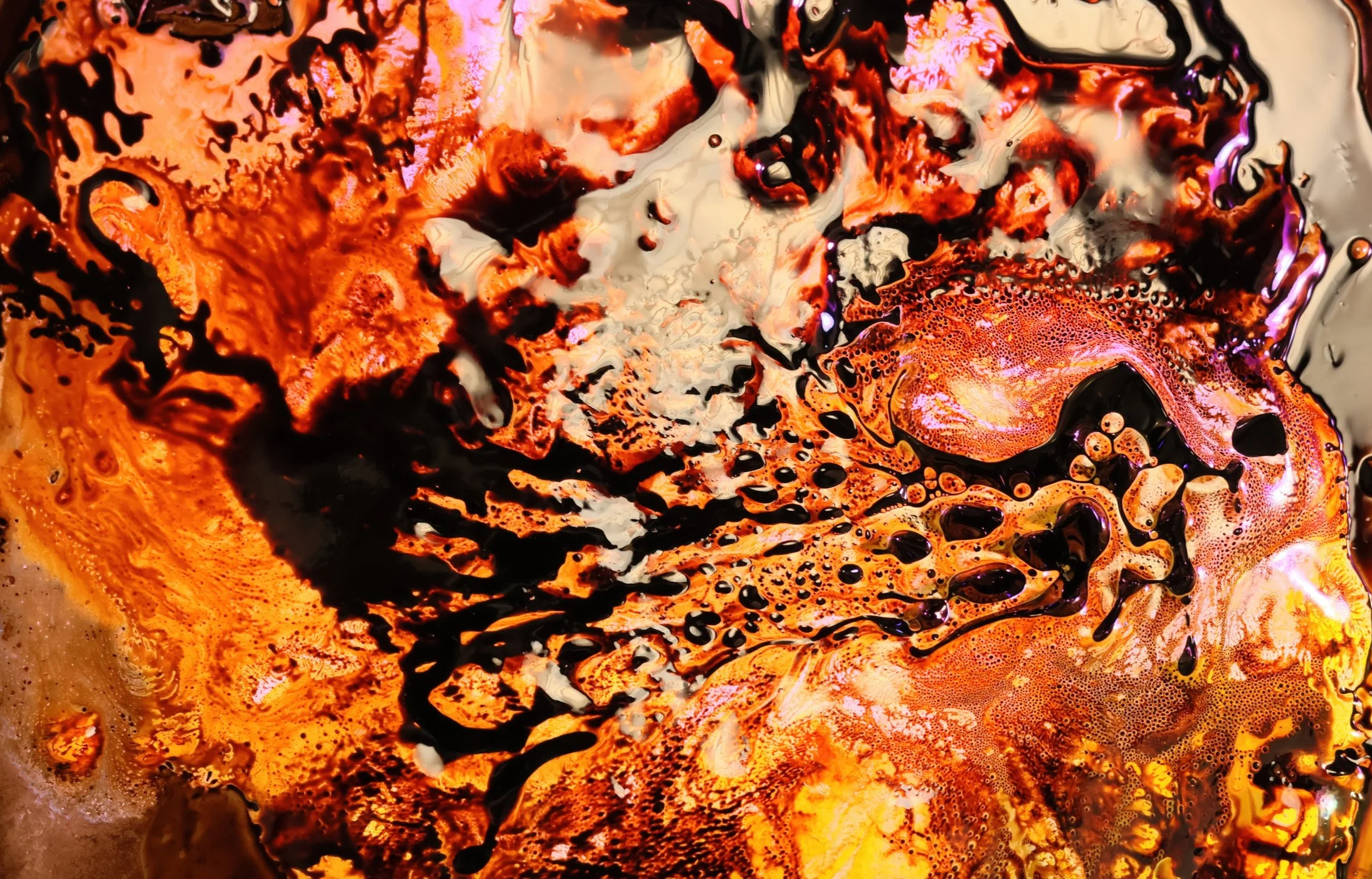
NERETVA VALLIS
1
Neretva Vallis is an ancient river valley within Jezero Crater, the landing site of NASA’s Perseverance rover. The region was once part of a flowing delta system where water carried sediments into the crater basin, making it one of the most promising locations on Mars for preserving signs of past microbial life.
MEDUSAE FOSSAE
2
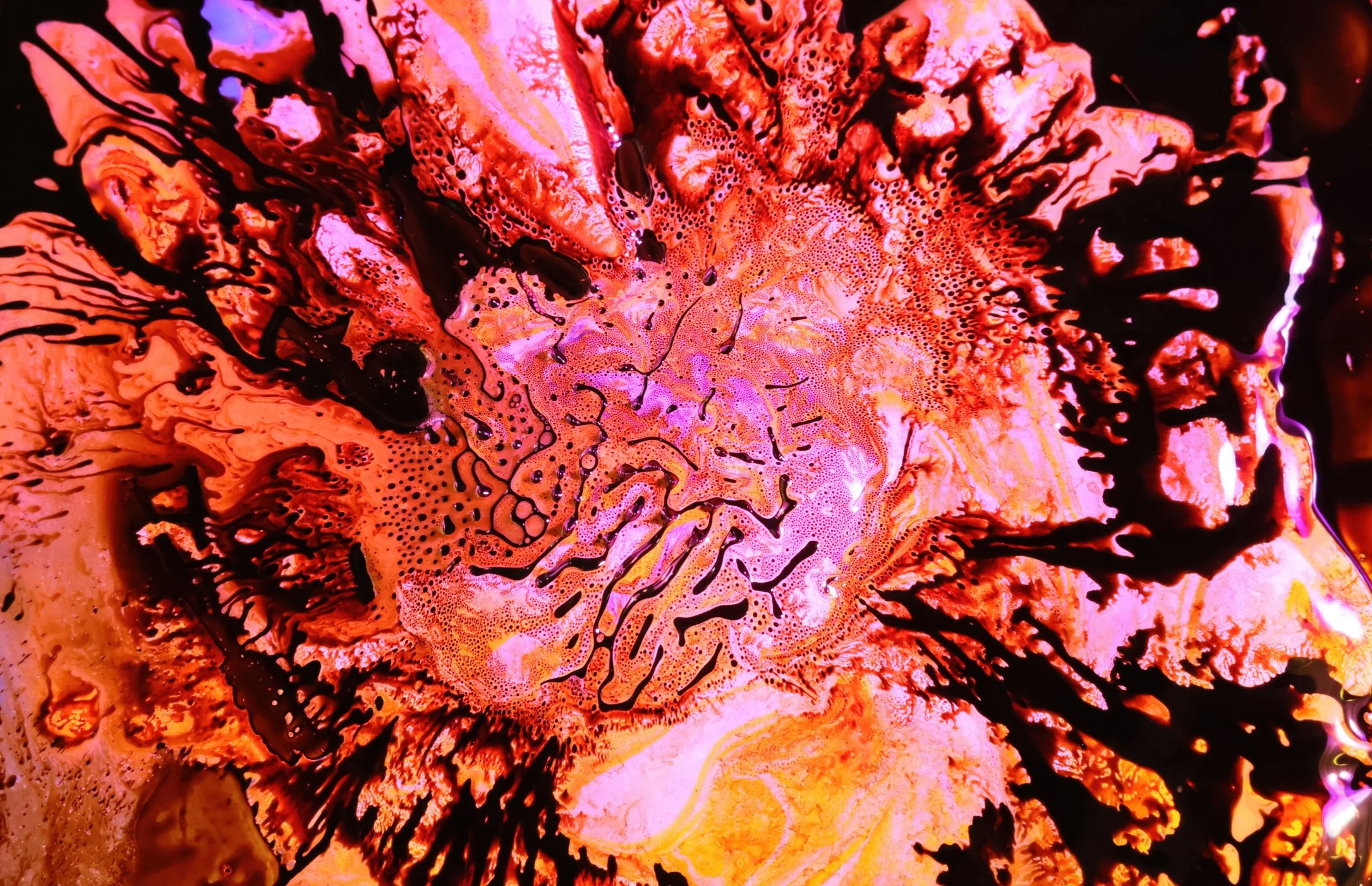
Medusae Fossae is a vast and enigmatic formation on Mars near the planet’s equator, believed to be composed of ancient volcanic ash deposits sculpted by wind into soft, flowing terrain. The region’s rippling layers and eroded formations resemble waves frozen in motion—an echo of the branching, molten structures that appear in this image.
NOCTIS LABYRINTHUS
3
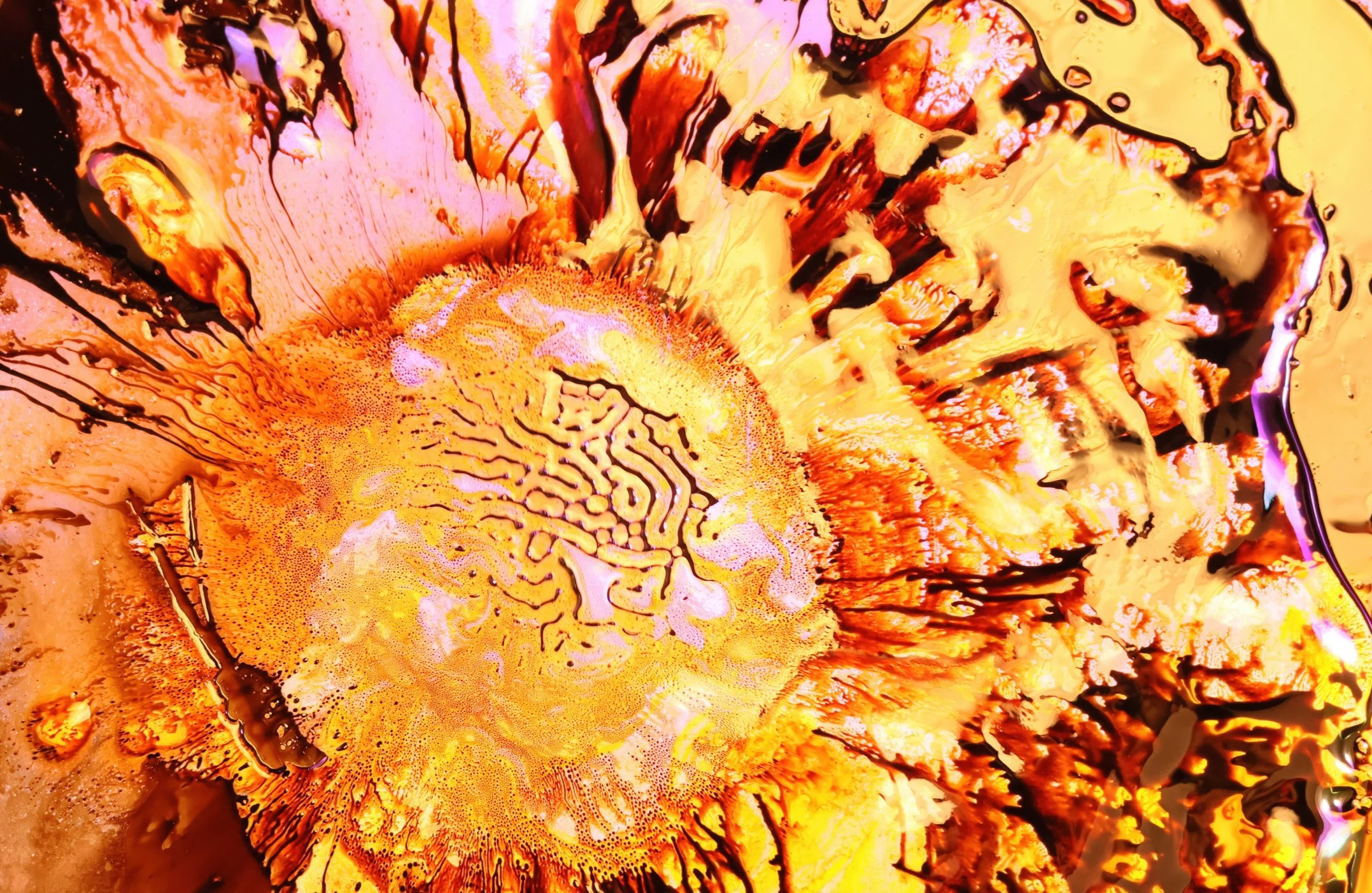
Noctis Labyrinthus is a vast network of deep valleys and inlets located at the western edge of the Valles Marineris canyon system. Its maze-like terrain was formed by tectonic stresses that fractured the Martian crust, creating a dramatic landscape of intersecting chasms.
CHEYAVA FALLS
4
Cheyava Falls is a rock formation within Jezero Crater where NASA identified compelling geological features associated with possible ancient microbial activity. The site contains distinctive mineral deposits known for its “leopard spot” patterns, which are linked to microbial processes on Earth that can support life.